Showing posts with label plant foods. Show all posts

Saturday, November 30, 2013

Post Thanksgiving Cleanse!

Turkey day is officially over, by now you should have eaten at least 3 days of left overs, all of which included heavy starches, meats and hopefully vegetables.  If you are feeling sluggish as a result of eating too much and just want to cleanse and prep your digestive system and body for the coming Christmas holiday here are a few tips to get you started.

1.      After all the leftovers are gone, get into the habit of eating light again. Replace a meal with a healthy nutritious salad (recipe below), a delicious natural juice or smoothie that aids in digestion and cleanses all at the same time.

2.      Limit the amount of meat you eat daily. Dietary recommendations for meats or protein range between 5 - 6.5 oz. respectively for men and women.  Actual portion for meat is approximately 2-3oz.  Three ounce is equivalent to a pack of playing cards, a small thigh, drum or half of a bone in chicken breast.

3.      Eat added fish in place of meats; choose fatty fish such as salmon, tuna, Atlantic or Pacific mackerel, sardines and herring. These fish are loaded with omega 3 fatty acids and are naturally low in fat and cholesterol.

4.      Beans and peas base soups are an excellent way to get more protein and fiber! Fiber of course increases bowel motility when paired with accurate water intake. We need between 25 to 30 grams of fiber daily. One cup of cooked beans is equivalent to approximately 15g of fiber. Nuts and seeds, whole or in the form of butter or milk are also good non-meat protein choices.

5.      Juice or blend fresh vegetables, and fruits.  Add these spices; ginger, cinnamon, nutmeg and cloves for flavor and digestion (see juice recipe below).
 
Recipes

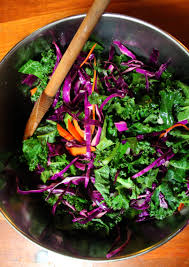
Raw Kale Salad


3 cups washed and chopped raw kale
1 cup shredded purple cabbage
¼ cup roasted or raw pumpkin seeds
¼ cup dried cranberries
Toss ingredients together, add a light, fat free dressing and serve.


Cleansing Smoothie

1 cup spinach
½ ripe bananas
½ cup almond milk

Blend all ingredients in blender pour and serve

Cleansing Juice

Juice ½ beet root, 3 carrots, and a small piece of ginger root and serve(can use a tsp. of ginger powder in place of fresh root).  If more juice is needed increase the amount of beets and carrot used.
 
Juice parsley, cucumbers, celery and and lime for another refreshing, cleansing drink!


Friday, March 16, 2012

GROW SOMETHING!

Plant a garden this spring, it won't take much, just your will, dirt and some seeds.

Get back to nature, back to understanding how our foods grow, how the earth consistently provides for us. Plant a vegetable or herb garden this spring and remind yourself of nature's gift of freshness.

 Gardening is a great way to bond with nature, reduce stress, and eat fresh.  

Vegetables like eggplant, sweet peppers, snap beans, okra, carrots, summer squash and tomatoes are great starters.

 Season your meals with herbs from your garden.  Rosemary, basil, oregano, thyme, sage, garlic, and onions will make your salads pop and lessen the need for salted seasonings.

Beginners can Google gardening tool needs online or visit your local Home Depot or Lowes gardening center for instructions and advice.  For those existing in urban areas with restricted space consider renting a plot, or joining a garden association. You can also begin the process by using flowering pots.

Some helpful tips:

1. Select an area to plant your garden and begin prepping soil. Avoid using weed killers and pull weeds with hands

2. Use natural compost on your soil before planting; this will reduce the need for fertilizers later on

3. Don’t crowd your seeds, allow sufficient space between them, this will allow seeds to grow better


4. Water before you plant and know how much water your seeds will need once planted. This information along with other gardening explanations can be found online

 Planting and harvesting time can be determined by accessing your state's harvesting calendar online.


Wednesday, April 6, 2011

Wheat Berries

Just found out I like this food. Had it for the first time in a salad and it was delicious!

What are Wheat Berries?

Wheat berries are essentially unprocessed wheat kernels without the hull.  Pasta, flour and breads are all products of processed wheat berries. 

Wheat Berries are categorized as white or red, soft or hard. Either of the white or red variety can be found in soft or hard. The hard wheat berry has more gluten and takes longer to prepare than the soft kind.

Wheat berries can be cooked like rice eaten as a side dish or added to soups and salads for a nutty, flavorful whole grain dish. 1 cup of wheat berries yields about 300 calories and it’s loaded with fiber, protein and iron. Remember for any starch such as rice, flour, oats 1/2 cup cooked is considered 1 serving.

Wheat berries can also be soaked in water and sprouted this too can be added to salads. The sprouts are supposed to be a good source of the antioxidant vitamin E.

Where to get Wheat Berries

Wheat Berries can be found at natural food markets, health food stores or in the natural foods section at your local grocery store.

NOTE: white wheat berries are not refined; it’s the natural lightness of the grain that lends to its name.

For recipe ideas visit the foodnetwork.com, eatingwell.com, cooks.com or just Google search wheat berry recipes.

Monday, January 31, 2011

The Whole Body Nutrition Concept.

The Whole Body Nutrition concept encourages a healthy body, mind and spirit. We encourage you to learn and experiment with different ways to eat and live a healthier life, no matter what dietary path you are following.

With that said these 5 criteria will get you on your way:

1. Live Foods
Choose foods that are real, natural, fresh, seasonal and unprocessed.
Eliminate refined starches such as white flour, sugar and artificial drinks.
Limit canned foods, boxed or frozen meals as often as possible

2. Plant Base
Plant base foods such as vegetables, fruits, nuts, legumes (peas, beans) seeds and whole grains are essential for a healthy, low fat, and nutrient rich diet.
When choosing plants choose a variety of color, more color means a wider range of nutrients.
Support local farmers markets. Fruits and vegetables are often fresher and cheaper when purchased from local farmers market.

3. Low Fat
Get your fats from lean meats such as fish, chicken, turkey lean beef, nuts, and low fat dairy products.
Avoid margarine and foods made with hydrogenated oils (trans-fat)
Substitute a plant base protein such as seitan (high protein wheat gluten), Tofu, vegetable burgers beans or peas for a meat occasionally
Limit fried and process foods.

4. Nutrient Dense (Nutrition Rich)
Choose foods with high nutrient content. Nutrients are the vitamins and minerals that the foods we eat provide. They are important for growth and development in children and maintenance of our health as we get older. Nutrients such as calcium, iron, vitamin c, and vitamin d just to name a few are essential to our wellbeing.
Eat natural fresh foods they have fewer calories and are rich in nutrients.
Use food labels to guide you when trying to improve your nutrient intake.

5. Live Active
Having an active lifestyle will keep you in shape, prevent excessive weight gain and help you feel better overall.
Whether it’s exercising, or doing one of your favorites activities such as bowling, dancing, skating being active is not just good for your body it’s also great for your mind.